How Aluminum Paste Is Manufactured: A Step-by-Step Guide
2026 / 03 / 07Aluminum paste is a key metallic pigment used in coatings, inks, plastics, and many industrial applications. Its bright metallic appearance and reflective properties come from the unique structure of aluminum flakes formed during the production process.
Although the final product looks simple, the manufacturing process of aluminum paste requires precise control at every stage to ensure stable particle size, brightness, and performance. The following guide explains the main steps involved in producing high-quality aluminum paste.
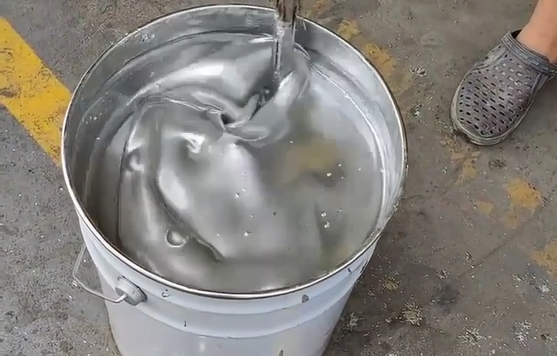
Step 1: Ball Milling – Creating Aluminum Flakes
The production process begins with ball milling, which is one of the most critical stages in aluminum paste manufacturing.
In this step, aluminum powder, additives, and solvents are placed into a ball mill at a carefully controlled ratio. As the mill rotates, the grinding media flatten the aluminum particles into thin flakes. During this process, lubricating agents help control friction and prevent excessive oxidation.
The milling time and operating conditions must be precisely controlled. If the milling process is too short, the aluminum particles will remain too thick. If it is too long, the flakes may break or lose their reflective properties.
Because of this, the ball milling stage largely determines the metallic brightness and reflective quality of the final aluminum paste.
Step 2: Screening – Particle Size Classification
After the milling process is completed, the aluminum paste is discharged from the ball mill and diluted to a suitable concentration. The material then passes through a screening system.
The purpose of screening is to separate aluminum flakes according to particle size. This step ensures that the product meets specific particle size requirements, which are essential for different applications such as automotive coatings, printing inks, or industrial paints.
Precise screening also improves batch consistency and helps manufacturers produce aluminum paste grades with controlled particle size distribution.
Step 3: Filter Pressing – Partial Oil Removal
Once the aluminum paste has been screened, it moves to a filter press system. During this stage, part of the solvent or oil carrier is removed from the slurry.
The filter press compresses the material to produce a semi-solid filter cake, which contains aluminum flakes with a controlled amount of residual solvent.
This step helps stabilize the product and prepares it for further processing in the finishing stage.
Step 4: Kneading and Color Adjustment
The filter cake is then transferred to a kneading machine for the final processing stage. During kneading, additional solvents and processing additives are added to the material.
The kneading process serves several purposes:
-
Fully dispersing aluminum flakes
-
Adjusting the viscosity of the paste
-
Stabilizing the metallic pigment
-
Optimizing the final product performance
At this stage, manufacturers also adjust the visual characteristics of the aluminum paste, including:
-
Brightness or darkness
-
Metallic tone
-
Particle coarseness or fineness
-
Hiding power
Through careful formulation and mixing, the final aluminum paste is tailored to meet specific application requirements.
Precision Manufacturing Ensures Consistent Metallic Performance
Producing high-quality aluminum paste requires strict control over each step of the manufacturing process—from ball milling and particle classification to filtration and final kneading. Each stage directly influences the metallic brightness, particle structure, and performance of the final product.
By carefully managing these steps, manufacturers can produce aluminum paste with stable quality, controlled particle size, and strong metallic effects, making it suitable for applications ranging from automotive coatings to industrial finishes.