Bronze Powder Uses: Applications in Industrial Coatings and Printing Inks
2026 / 10 / 17Plastic components are widely used in automotive interiors, electronic housings, household appliances, and decorative products. To improve their visual appeal, manufacturers often use metallic coatings that create a bright silver finish or a refined metallic appearance.
Selecting the right aluminium paste for plastic coatings is essential for achieving consistent color, smooth surfaces, and reliable coating performance. Pigment selection, resin compatibility, dispersion, and application conditions all influence the final result.
1. Why Is Aluminium Paste Used in Plastic Coatings?
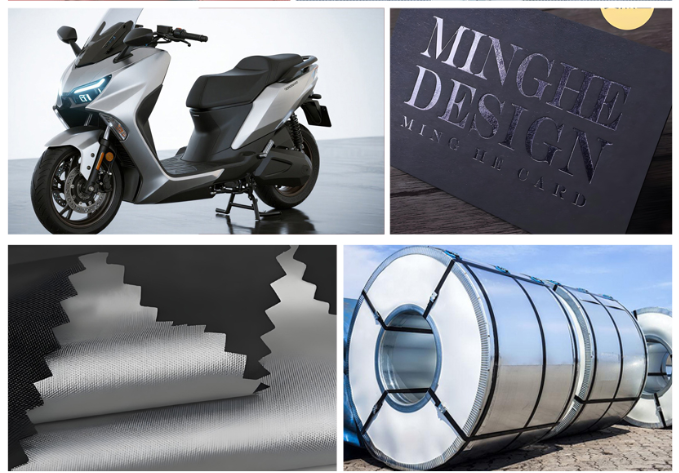
Aluminium paste contains thin, flake-shaped aluminium particles that reflect light and create a metallic appearance. When incorporated into a suitable coating formulation, these particles help produce decorative finishes that ordinary solid-color pigments cannot easily replicate.
Common applications include:
-
Automotive interior components: Decorative trim, control panels, and selected plastic parts.
-
Electronic housings: Metallic finishes for device enclosures and consumer electronics.
-
Household appliances: Decorative panels, control components, and plastic housings.
-
Consumer products: Cosmetic packaging, decorative accessories, and molded plastic components.
The required metallic effect varies by application. Some products need a bright silver appearance, while others require a softer metallic finish with a uniform surface.
The aluminium paste grade should therefore be selected according to the intended appearance and the complete coating system.
2. How to Achieve a Smooth and Uniform Metallic Effect
A smooth metallic finish depends on how the aluminium flakes are distributed and oriented within the coating film.
Several factors can influence the final appearance.
Particle size and distribution
Particle size affects the visual texture, reflectivity, and coverage of the coating. Fine grades may help produce a more refined appearance, while other particle sizes may be more appropriate for stronger sparkle effects.
The smallest particle size is not automatically the best choice. Manufacturers should balance brightness, surface smoothness, and hiding power according to the application.
Pigment dispersion
Poor dispersion can lead to visible agglomerates, uneven metallic effects, or surface defects.
To improve dispersion consistency, follow the supplier's recommended incorporation procedure and avoid unnecessary high-shear mixing that may damage the aluminium flakes.
Application conditions
Spray pressure, coating viscosity, application distance, and film thickness can affect the final metallic appearance.
For critical decorative components, conduct spray trials under controlled conditions and evaluate the coating after drying or curing.
3. Resin Compatibility in Plastic Coating Formulations
Choosing aluminium paste for plastic paint requires careful consideration of the binder system and carrier compatibility.
A pigment that performs well in one formulation may not deliver the same results in another because resins, solvents, additives, and processing conditions can differ.
Before selecting a grade, evaluate the following:
-
Resin system: Confirm compatibility with the intended acrylic, polyurethane, or other coating binder.
-
Carrier system: Ensure that the paste is suitable for the formulation's solvent or other carrier components.
-
Dispersion stability: Check for agglomeration, excessive settling, and changes in viscosity.
-
Storage behavior: Assess whether the formulated coating maintains acceptable stability over the intended storage period.
Compatibility testing should be performed using the actual formulation rather than relying solely on the general resin category.
For plastic coating applications, also consider the substrate material and any pretreatment required before coating.
4. Adhesion and Durability on Plastic Substrates
A visually attractive metallic finish is not sufficient if the coating does not adhere properly to the plastic substrate.
Different plastics have different surface properties. Some may require cleaning, surface treatment, a primer, or a specially formulated coating system to achieve the required adhesion.
When developing a metallic plastic coating, consider:
-
Substrate type: Identify the specific plastic, such as ABS, PC, or an appropriate plastic blend.
-
Surface preparation: Remove contamination and follow the recommended pretreatment procedure.
-
Coating compatibility: Ensure that the primer, metallic basecoat, and any clearcoat work together.
-
Adhesion testing: Evaluate the complete coating system using a suitable test method.
-
Service requirements: Consider scratch resistance, chemical exposure, and other end-use conditions.
Aluminium paste contributes to the metallic appearance, but adhesion and durability depend on the entire coating system, substrate, and processing conditions.
5. How to Select Aluminium Paste for Different Plastic Parts
Different plastic products have different appearance and performance requirements.
| Application | Main requirement | Key selection considerations |
|---|---|---|
| Automotive interior parts | Refined metallic appearance | Brightness, uniformity, adhesion, and scratch resistance |
| Electronic housings | Consistent decorative finish | Dispersion, surface smoothness, and batch consistency |
| Appliance components | Uniform metallic color | Resin compatibility, coverage, and application stability |
| Decorative plastic products | Target color and visual effect | Particle size, gloss, and metallic texture |
For example, an electronic housing may require a smooth, consistent metallic appearance across multiple production batches. An automotive interior component may also require additional testing for scratch resistance and chemical exposure.
The final selection should be based on sample testing using the intended substrate and coating process.
6. Common Problems and Practical Solutions
Why does the metallic finish look uneven?
Possible causes include poor pigment dispersion, inconsistent film thickness, unsuitable application conditions, or inappropriate pigment selection.
Review the formulation and spray process before changing the aluminium paste grade.
Why does the coating lose brightness?
Brightness can be affected by aluminium flake damage, poor dispersion, unsuitable formulation components, or changes in flake orientation during application.
Check mixing conditions, resin compatibility, and application parameters.
Why does the coating peel from plastic?
Peeling may result from inadequate surface preparation, unsuitable primer selection, poor binder compatibility, or insufficient curing.
Evaluate the complete coating system and confirm adhesion on the actual plastic substrate.
7. Frequently Asked Questions
Q1: What type of aluminium paste is suitable for plastic coatings?
The appropriate grade depends on the desired metallic effect, resin system, application method, and performance requirements. Test samples in the intended formulation before confirming the final grade.
Q2: Can aluminium paste be used on ABS and PC plastic parts?
Suitable grades may be incorporated into coating systems for ABS, PC, and other plastics. However, substrate preparation, binder compatibility, and adhesion must be evaluated for each specific material.
Q3: How can manufacturers improve metallic appearance consistency?
Control pigment dispersion, coating viscosity, spray parameters, film thickness, and curing conditions. Standardized application trials can help identify the most suitable formulation and process.
Q4: Should aluminium paste be tested before mass production?
Yes. Sample testing helps verify metallic appearance, compatibility, application behavior, and coating performance before large-scale production.
Conclusion: Choose the Right Aluminium Paste for Plastic Coatings
Achieving a smooth metallic finish on plastic components requires the right combination of aluminium paste, resin compatibility, dispersion control, and application conditions.
By evaluating these factors together, manufacturers can improve appearance consistency and reduce formulation adjustments during production.
ZHANGQIU METALLIC PIGMENT CO., LTD. supplies metallic pigment products for industrial coating applications. Contact our team to discuss your plastic coating requirements and identify a suitable aluminium paste grade.
Website: https://zqmetallic.com/
Email: info@zqmetallic.com
- Previous:Aluminium Paste Uses: Applications in Industrial Coatings and Inks
- Next:I have no