Leafing vs Non-Leafing Aluminium Paste: Performance, Applications, and Selection Guide
2026 / 01 / 14Why Aluminium Paste Structure Matters in Coatings
Aluminium paste is one of the most widely used metallic pigments in coatings, inks, and industrial finishes.
While often discussed as a single category, aluminium paste actually exists in two fundamentally different forms: leafing and non-leafing aluminium paste.
The distinction between these two types lies in flake surface treatment and behavior during film formation.
This difference directly affects metallic appearance, gloss, barrier performance, corrosion resistance, and compatibility with coating systems.
Understanding how leafing and non-leafing aluminium paste function is essential for selecting the right pigment solution for decorative, automotive, and industrial applications.
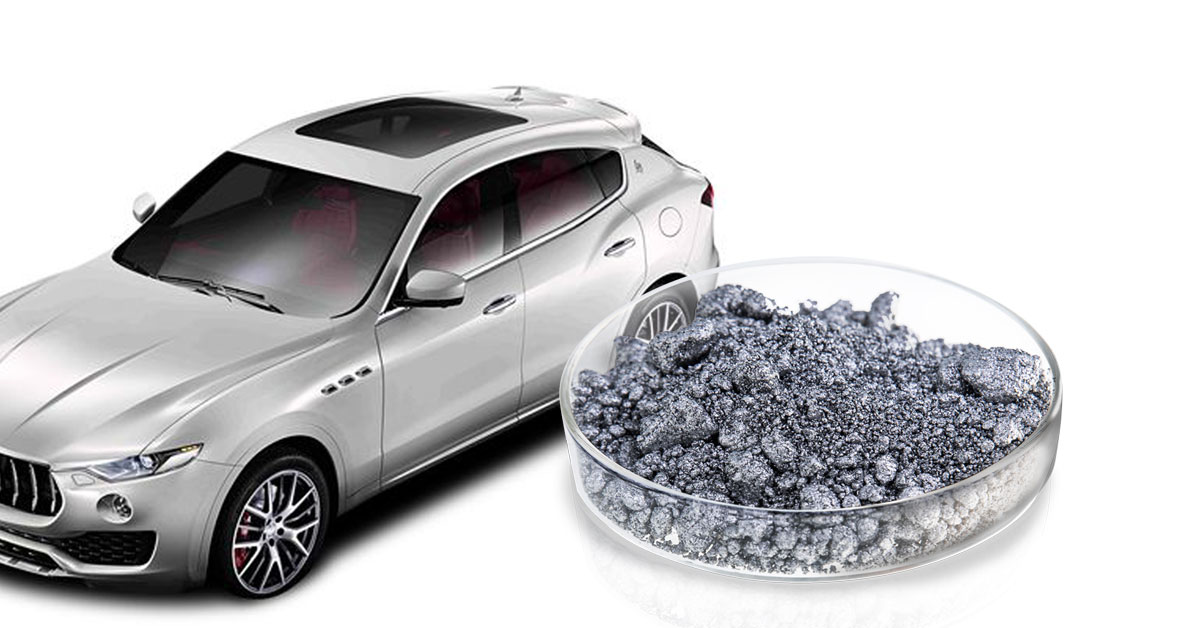
Leafing Aluminium Paste: Floating Flake Orientation Mechanism
Surface Migration During Drying
Leafing aluminium paste is characterized by aluminium flakes treated with hydrophobic surface agents.
During the drying process, these flakes migrate toward the coating surface and align parallel to it.
This creates:
-
A highly reflective metallic surface layer
-
Strong light reflection and brightness
-
A continuous “metallic shield” near the film surface
This floating or “leafing” behavior is the defining feature of leafing aluminium paste.
Visual and Functional Characteristics
Coatings formulated with leafing aluminium paste typically show:
-
High metallic brilliance
-
Pronounced sparkle under direct light
-
Excellent surface reflectivity
In addition to appearance, the surface-oriented aluminium layer provides enhanced moisture resistance by limiting water penetration.
Non-Leafing Aluminium Paste: Uniform Film Distribution
Even Dispersion Within the Coating Matrix
In contrast, non-leafing aluminium paste disperses evenly throughout the entire coating film.
The aluminium flakes remain embedded within the binder rather than migrating to the surface.
This results in:
-
Uniform metallic appearance
-
Balanced reflection across different viewing angles
-
Improved compatibility with topcoats and clear coats
Mechanical Stability and Durability
Because flakes are distributed throughout the coating, non-leafing systems offer:
-
Better abrasion resistance
-
Improved interlayer adhesion
-
Greater long-term appearance stability
These properties make non-leafing aluminium paste especially suitable for automotive and industrial coatings.
Performance Comparison: Leafing vs Non-Leafing
|
||||||||||||||||||
|---|---|---|---|---|---|---|---|---|---|---|---|---|---|---|---|---|---|---|
Application-Based Selection Guide
Decorative and Protective Coatings
Leafing aluminium paste is commonly used in:
-
Decorative metallic paints
-
Anti-corrosion topcoats
-
Roof and exterior protective coatings
Its strong surface reflectivity and barrier effect make it suitable for visually striking finishes.
Automotive and Industrial Coatings
Non-leafing aluminium paste is preferred for:
-
Automotive basecoats
-
Industrial equipment coatings
-
Coil and machinery finishes
These applications require durability, consistency, and compatibility with multilayer coating systems.
Conclusion
Leafing and non-leafing aluminium paste serve distinct technical purposes.
Selecting the correct type based on application requirements ensures optimal balance between appearance, protection, and durability.